 Leaf Cutter Bee
While sitting out in the garden recently eating dinner, we were attracted by audible munching noises from our wisteria plant. Further investigation showed a bee-like creature neatly chopping an oval piece out of a leaf then flying away with its prize. It then returned for another piece of leaf, and then several more.
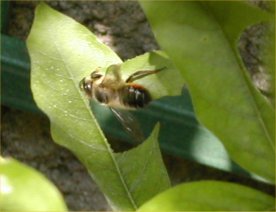
Later research told us that it was indeed a bee—a leaf cutter bee in fact—a solitary but quite friendly creature that likes wisteria, rose and other leaves as nest making material.






 Webmaster
ive got a swarm of leaf cutters living in my lawn ,would like to know how to get rid of them,its a bit of an inconvenience,as we cant sit at front in the sunshine while they are buzzing around,so if any one can help me it would be gratefully appreciated thanks george england
Another remarkable feature of these bees is what they do with the segments of leaf they cut from your prize roses! We recently spotted a bee carrying a piece of leaf and disappearing into a hole in an exposed rafter. On examination we discovered that the wood was rotten and had numerous tunnels bored into it. Stacked end to end inside the tunnels were dozens of tube shaped leaf parcels. These looked like small cigars, were meticulously sealed at the end with a circular piece of leaf, and inside each was a small grub lying on a puddle of gloop which I guess was nectar and/or pollen. An amazing feat of engineering and construction by the bee – just bad news for our rafters!
For my birthday in September three years ago, I was given a bee house that was and is still sold at garden centres, it has 24 square holes. The first summer no bees showed any interest in it, year two we were sitting in the garden and we noticed a bee going into one of the holes. thought the day this bee keep coming back and was now bring in bits of leafs which we watch him cut from some of our flower plants in the garden. By the end of the second summer nine of the holes were completely filled up and four had what looked like something trying to fill them. In spring of year three we were hopeful that a bee may come out of one of the holes, but nothing happen. Now we are in July of year three and the bees are active again with most of the holes now filled up. What I would like to know is, is the bee just storing nectar or is this a nest where we would find a lava grub?
George, I would suggest the the best thing to do is enjoy the company of these fascinating creatures. They are not at all aggressive and unless seriously provoced are extremelely unlikely to cause you harm. I would suggest that you seek out the nest of one of these solitary creatures and marvel at the skill that they employ to make it. I work in propery maintenance and have only seen these nests in woodwork that is already in need of repair.
I have recently come across a leaf cutter bee at the front of my Office building. I have seen it flying in and out of a large crack between 2 paving slabs with a supply of leaves at our Office entrance…not the best place surely!! I have always been interested in watching the wildlife here and although we are in the town centre we have a garden area. Last year I spotted 5 different bee species although sadly this year only one. I was greatly cheered up to spot the leaf cutter!! That makes 2 : }
Ants can be a issue. Presently you need to have to take measures to dispose of your current infestation. There are several objects you can utilize that really don’t hold chemical compounds and won’t harm youngsters or pets. Sprinkle cornmeal or a company oat like Cream of Wheat wherever you have seen ants congregating in your residence or all over the edge of your enclosure. The ants will convey this food in excess of to the state, having said that they cannot consume it it kills them. An alternate adequate system is to blend a balance of window cleaner and Ivory dish cleanser. Far more on my web page.
Not much more information on your web site either, and the grammar is pretty mangled. You would be better posting in your native language.