TapTalking Telephone Numbers

14 Oct 2008 12:00 by Rick

There are a lot of ways to write telephone numbers, plenty of “standards” to chose from so why do so many people get them wrong?

For national numbers the only essential requirement is a space between the local part and the area code: that is 0117 9123456 (NOT 01179) for Bristol and 020 84641234 (NOT 0208) for London. Parentheses, hyphens and extra spaces can be put in for readability and local custom but it is not essential. A typical US number would be written (918) 555 1212.

On the web, it is often better to use international numbers. These should be written with a plus at the start, a space between the country code and the area code and another before the local part: i.e. +44 117 9123456. The ITU-T E.123 standard recommends that only spaces are used for extra separation. A typical French number (in Strasbourg) would be +33 388 12 34 56.
TapHigh Speed Chase

13 Oct 2008 12:21 by Rick

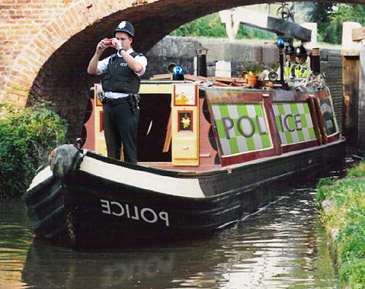
Police narrowboatCanal boat chase ends in capture after eight days. I am not 100% sure that this story is genuine, but it is very funny anyway. The gist is that they applied for permission to exceed the 4mph speed limit but found that the boat wouldn’t go any faster anyway—something I can confirm from experience, it is the depth of water that is the problem.

TapBumps in the Road

10 Oct 2008 10:16 by Rick

Yellow/buff! tactile pavingI’m sure everyone if familiar with the knobbly pavements put in so the blind can tell where the crossings are. Have you noticed that they are pink near lights controlled crossings and yellow elsewhere?


Why? I have conducted a blind test (boom! boom!) and he can’t tell the difference. The bumps are the same size, spacing and direction. Yet the official guidelines do specify that this is what has to be done.

Tactile paving, in the form of ‘blister’ paving should be red in colour at controlled pedestrian crossings (pelican, zebra, toucan and puffin crossings). But at uncontrolled crossings it should be buff in colour, to indicate the presence of a dropped kerb.

Access Group Resources

Even the partially sighted, who also benefit from these markings, would have trouble distinguishing the pale colours.

TapWesley was an Anglican

9 Oct 2008 12:04 by Rick

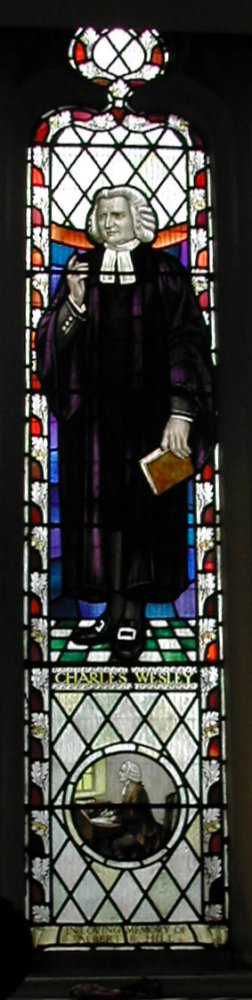
Charles Wesley WindowDo you suppose there is another Anglican church that commemorates a Wesley in a stained glass window? I have never seen one. Admittedly it is Charles not John but still pretty amazing.

It forms part of a set of four in our church (St. Matthew’s, Kingsdown, Bristol) with John Bunyon, William Tyndale and Thomas Cranmer. These were installed, we think, in the middle of the last century.

TapCode Comments

28 Sep 2008 18:01 by Rick

Putting comments in code is a well established, if not rigidly employed method of documenting what the thing does. At best it tells future maintainers how it works and at worst it reminds you when you come back to it later. It doesn’t do anything else. With WordPress it does!

I wanted to make one page in a blog type application look different. The WordPress documentation says that first it looks for a template called pagename.php

Any custom Page Template selected for the page – If the page slug were about, WordPress would look for about.php

failing that then one called page.php and finally index.php working down the hierarchy until it finds one that exists. Now you would think that “pagename” was the name of the page—wrong!

After rootling through the forums I discovered that you have to select a custom “Page Template” on the write/manage page admin panel, THEN it directs it to use the right one.

Looking at the panel—no sign of a “Page Template” menu as promised. Further deep hunting on the forum and even resorting to Google I discover that you have to declare your custom templates—by adding a comment to the beginning in the form

<?php
/*
Template Name: templatename
*/
?>

Now the menu appears and you can chose between “Default Template” or the one you have declared “templatename” That is what I meant. These are not comments, even if they look like comments because the theme integration code is reading and interpreting them. They are effectively executed. I wonder if that is true for any others?

TapSlow progress

25 Sep 2008 10:56 by Rick

Sorry there haven’t been many posts here recently. I have been working on a new web site for someone else which I will announce when it is launched, probably mid November.

A blank image

  • While doing that I came across a bug which I first saw years ago and thought would be fixed by now. Back when I first started coding web sites, in 1998 when blogs hadn’t been named but this site performed a similar function, we had to allow for all sorts of browser bugs. Good web pages had special coding to allow for the differences between Internet Explorer and Netscape.
  • There was still a problem when IE6 came along and, as there is still a lot of it about, that is what I spent all yesterday evening fixing. The current releases of browsers are generally good enough so that you only need to code for their differences if you are very fussy or are using something obscure.
  • So it came as a surprise that the float & list bullet overlap problem still existed. I have tried to demonstrate it by enclosing the last few paragraphs in a list. The pink image is outside of the list and floated to the left which allows paragraphs to flow around it. This fails in all browsers that I have tried so perhaps it is a specification problem and they are all sticking to the rules. It is surely wrong though.

TapDiamonds are forever?

19 Sep 2008 12:25 by Rick

One of our super-bosses today, used the phrase “because diamonds last forever…” Is this true? I don’t think so. Diamond is said to be the hardest known substance naturally occurring, but that doesn’t mean that it is indestructible. They will shatter if treated roughly because they are brittle. They will also burn (with some difficulty) and dissolve in some substances. For this reason I suspect that they do also naturally decay by oxidation but very slowly due to the tight molecular bonds.

It is also to be noted that diamond is not the rareest or most expensive of the gem stones. Good sapphires, emeralds, garnets and rubies are much less common and fetch higher prices; particularly now that sythetic diamonds are getting to be so good.

TapTitle Case

8 Sep 2008 14:16 by Rick

Title case is the way that the capitalisation is done for titles of things like songs, books and articles. Having had a hunt around, there doesn’t seem to be a good definition on how it should be done. Wikipedia describes a range of rules but doesn’t come down in favour of any of them except to say that it is not fashionable among publishers. Even so, if you are producing, say, a list of albums and songs for a media centre then it looks a lot better if you are consistent and, as the article points out, it is easier to automate rather than using sentence case and trying to spot the proper nouns.

The best rules I can come up with are…

  • Start with a capital.
  • Capitalise after spaces but not other punctuation.
  • Don’t capitalise any one or two letter words (except I) nor certain three letter words:—and, but, for, the, via & others for foreign languages (e.g. les, des).
  • Like all good rule sets there are always exceptions but these have to be done by hand.

TapSupport

6 Sep 2008 17:41 by Rick

The problem with joining any political party is that it is almost certain that you don’t agree with all of their policies. There is not much room for a Pro-Life Liberal or a Socialist who supports traditional marriage so inevitably you have to either compromise or abstain. I chose the former some years ago when I felt it was a duty to take a more active part in the running of the country and to make a small attempt to get views like mine recognised.

It was a pleasant surprise then to find a lobby group (not a party) with which I could agree with every one of their campaigns so far.


Who’s Watching Who? from Dean Whitbread on Vimeo.

I would encourage anyone who agrees with them (The Open Rights Group) to join.

TapBread Winner

14:03 by Rick

I am told that a breadmaker can be found sitting on a shelf, unused, in every modern kitchen. It is too early yet to discover if my new one will join the waffle maker, yoghurt maker, fondue set, tin opener, knife sharpener and raclette, but the first results were 100% successful. A nice fluffy white loaf with a crispy crust greeted us for breakfast this morning and the idea is that I make one every Friday that we are home at the same time as I wring the oranges.

A tip I can pass on from friend Liz is worth noting. On both our Panasonic models, the instructions say put the yeast in first followed by the flour and other dry ingredients and last of all the water. The idea is to keep the wet away from the yeast until it is needed. In practice this doesn’t work because the water, being heavy, leaks past the flour down the edges and spoils the yeast. The best way to do it is exactly the reverse; first the water with the fat THEN the flour which floats on top and finally the yeast which stays nice and dry. She has been doing this for years and I can confirm that it works perfectly.

N.B. For sacristans who might worry about these things, Mary will make the communion buns in the old way by hand unless numbers increase dramatically.

^ Top